
According to Wikipedia, gamification is “the use of techniques, elements and dynamics from games and leisure activities in non-recreational contexts in order to boost motivation and reinforce behaviour to solve a problem or achieve a goal.”
All of us who spend time around children, whether as parents or tutors, know how much they enjoy play. A few years ago educators began to use elements from games such as rules, rewards and competition in education. The goal was both to improve academic outcomes and to encourage certain behaviours. That, in essence, is gamification.
What is Class Dojo?
Class Dojo is a free application that works both on the web and on mobile devices across platforms, helping us implement a gamification strategy.
The idea behind Class Dojo is to help monitor students’ progress in the areas we want to improve.
How does it work?
Class Dojo is structured on several levels:
- School
- Class
- Group
- Student
It also includes several user roles:
- Head teacher
- Teacher
- Student
- Parent
This structure allows a lot of flexibility while keeping everything organised and under control. A student can belong to a group, that group belongs to a class and that class belongs to a school. The head teacher can see how classes are doing, teachers can manage their classes and parents can follow their children’s progress.
To achieve the gamification goals we mentioned at the beginning, we need to define the behaviours we want to reward and those we want to discourage. For example, in a specific class we might reward:
- Group work
- Creativity
- Kindness toward classmates
- Taking care of school materials
And the attitudes we want to avoid could be:
- Swearing
- Talking in class
- Hitting classmates
- Running in the corridors
Each class can define different goals.
We can assign a positive or negative value to each of these attitudes and behaviours. Those scores can be shared with students so that, almost like a game, they can see their progress and become more aware of what they are doing well or badly.
In short, it is about using everything children find engaging in games to improve their attitudes, behaviour and abilities.
What can Class Dojo be used for?
Beyond rewarding or penalising attitudes, Class Dojo also allows you to:
- Track student attendance.
- Use a timer to manage certain activities.
- Create a class diary to note the milestones a teacher considers important in the day-to-day life of the class.
- Create a student portfolio to record progress, even allowing the student to write in it so they become part of the process.
- Maintain direct communication with parents, sharing scores and the student diary so they have a clearer view of progress, or informing them of any incidents directly.
Ultimately, Class Dojo is a teaching aid that each head teacher, teacher, student or parent can personalise and adapt to their own understanding of education.
If you want to know a little more about the tool, here are some useful links:
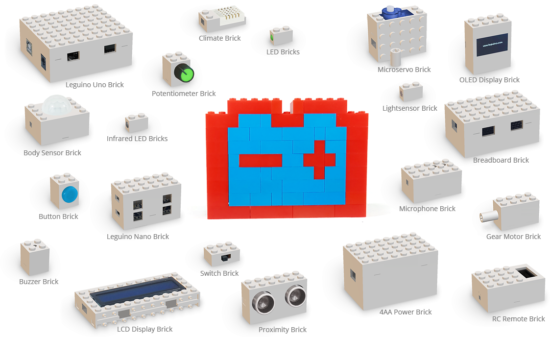
As you already know, at Garaje Imagina we are responsible for using the Rockbotic methodology throughout Aragón. Rockbotic is currently collaborating with Leguino on the development of a new educational robotics kit for children.
What does it involve?
The idea is to combine Arduino with Lego parts, bringing together the best of both worlds: the connectivity and programming capacity offered by Arduino and the ease of building structures with Lego pieces.
Here is the presentation video.